Overview
Hospital IT operates under constant clinical pressure. A network outage can prevent clinicians from retrieving scans, pharmacies from verifying prescriptions, and admissions from being processed. At the same time, growing imaging data, connected biomedical devices, demanding clinical environments and sensitive patient information require infrastructure built for reliability, security and continuous access.


Challenges We Solve
Hospitals need infrastructure that stays reliable under clinical pressure, secures connected systems, and scales as facilities, devices and data continue to grow.






-
Critical systems needing uptime
-
Imaging storage growth
-
Biomedical devices on shared networks
-
Coverage gaps in clinical areas
-
Patient data exposure
-
Ageing infrastructure under expansion
Our Solutions
Infrastructure engineered around clinical continuity, security, and future growth. Designed from the ground up for healthcare environments where reliable connectivity, protected patient data, and uninterrupted access to critical systems are essential.
-

Hospital Network Design & Deployment
Redundant network architecture built around clinical dependency.
-

Structured Cabling & Clinical Wi-Fi
Reliable connectivity across wards, theatres, labs and OPD.
-

Server, Storage & PACS Infrastructure
Scalable infrastructure for clinical systems and imaging data.
-
Network Segmentation & Security
Isolated, controlled access for clinical and biomedical networks.
-

Backup, DR & 24×7 Support
Tested recovery, monitoring and support for critical systems.
case study


-
Unifying Network Operations Across a Statewide Utility
- Link Failures At Distant Substations Were Reported Hours After They Occurred.
- Engineers Travelled To Sites Before Knowing Whether The Fault Was Local.
- Metering And Control Networks Had Grown Without Segmentation Or Monitoring.
READ CASE STUDY -
Rebuilding Campus Connectivity For A Large Engineering Centre
- Coverage Followed Past Complaints Rather Than Any Measured Density Or Survey.
- Simulation And Build Traffic Saturated Uplinks Sized For Earlier Headcount.
- Simulation And Build Traffic Saturated Uplinks Sized For Earlier Headcount.
READ CASE STUDY
-

Unifying Network Operations Across a Statewide Utility
- Link Failures At Distant Substations Were Reported Hours After They Occurred.
- Engineers Travelled To Sites Before Knowing Whether The Fault Was Local.
- Metering And Control Networks Had Grown Without Segmentation Or Monitoring.
-
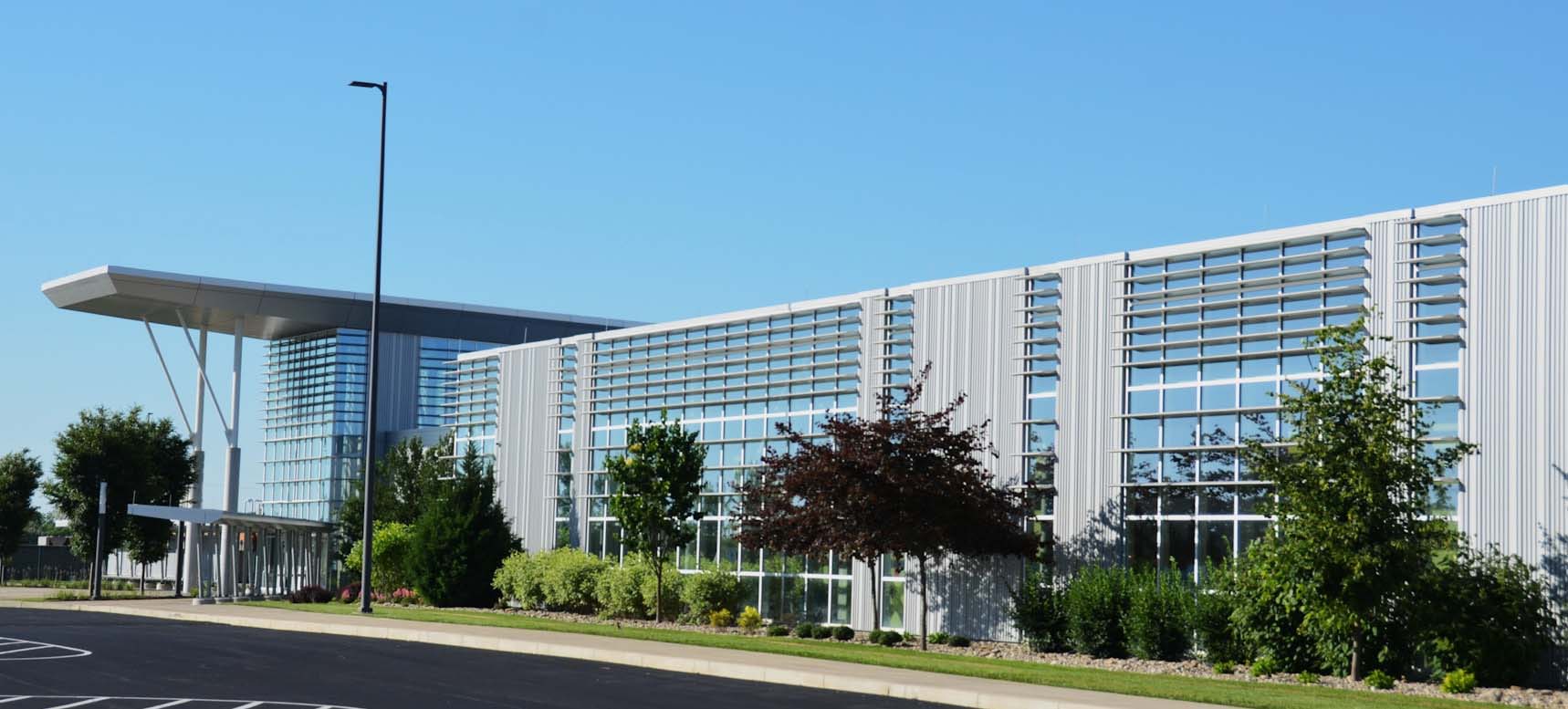
Rebuilding Campus Connectivity For A Large Engineering Centre
- Coverage Followed Past Complaints Rather Than Any Measured Density Or Survey.
- Simulation And Build Traffic Saturated Uplinks Sized For Earlier Headcount.
- Simulation And Build Traffic Saturated Uplinks Sized For Earlier Headcount.
Designed, Deployed and Managed for Continuity
-
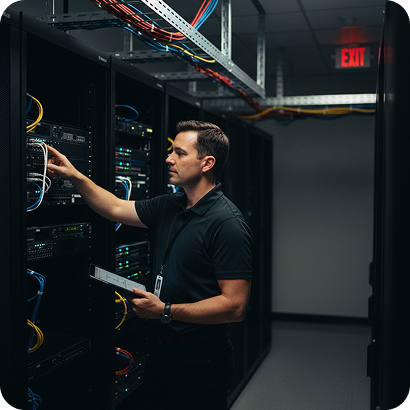
Site Assessment
Physical survey, estate audit, clinical dependency mapping and gap analysis.
-

Design
Network architecture, infrastructure planning, redundancy strategy, and implementation schedule
-
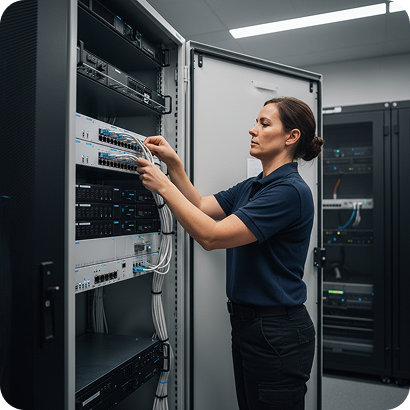
Phased Implementation
Work sequenced around clinical operations, with block-by-block cutovers and rollback plans
-
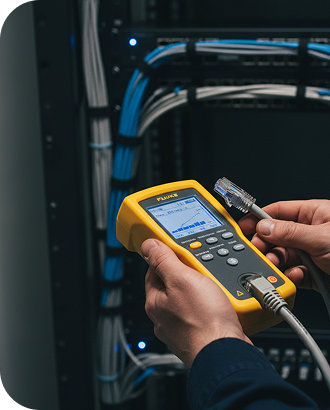
Testing & Certification
Cable certification, failover testing, coverage verification and documented handover
Infrastructure That Keeps Care Moving
Resilient networks, scalable storage and controlled access that reduce operational risk and keep critical hospital systems ready when they are needed
Healthcare IT Capabilities & Technology
Key Capabilities
- Redundant core network architecture
- Certified structured cabling
- Server virtualisation & clustering
- Tiered imaging & archival storage
- 24×7 NOC monitoring & response
Technology & Platforms
-

Network
Cisco · Aruba · Fortinet · Ubiquiti
-

Server & Virtualisation
Dell · HPE · VMware · Hyper-V
-

Storage
SAN · NAS · Tiered & archival storage
-

Security
Next-generation firewalls · NAC · Endpoint protection
-

Monitoring
NOC tooling · Alerting · Escalation
Frequently Asked Questions
Need help with something? Here are our most frequently asked questions.
Can infrastructure work be done without disrupting clinical operations?
Yes. We design around clinical continuity. Work is phased block by block, scheduled around clinical activity, with testing and rollback plans for every stage.
How do you handle PACS storage growth?
Through Tiered Storage Architecture. Recent Studies Stay On High-Performance Storage, While Older Studies Move To Archival Tiers Sized Around Your Actual Imaging Growth.
Can you secure biomedical equipment that cannot be patched?
Yes. Network Segmentation Isolates Vulnerable Or Unpatchable Devices Into Controlled Segments, With Restricted Access To The Wider Hospital Network.
Do you provide ongoing support or only implementation?
Both. Hospital Engagements Can Include 24×7 Monitoring And SLA-Backed Support, Helping Maintain Infrastructure Performance And Reduce Operational Risk After Implementation
Start with a site assessment
We will survey your existing estate, map clinical dependencies, and give you a prioritised infrastructure plan with costs per phase.