
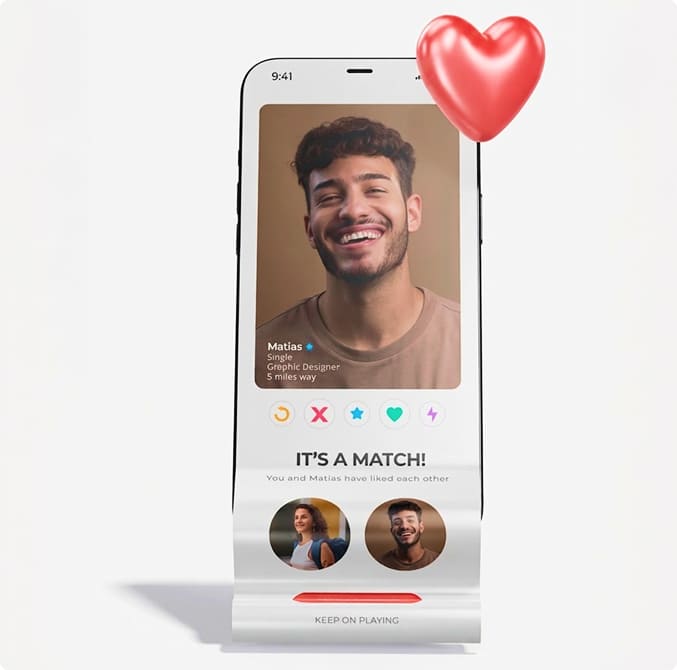
The Matchmaking Platform Was An Established, Business-Critical Application Built Around A Large And Continuously Growing Volume Of User And Matchmaking Data. Over The Years, The Platform Accumulated Significant Historical Information, User Profiles, Preferences, Interactions, And Business Data, Making The Existing System An Important Digital Asset For The Organization.
However, As The Platform Evolved And User Expectations Changed, The Limitations Of The Legacy Technology Became Increasingly Visible. The Existing Application Was Hosted In An On-Premise Environment And Had Been Designed Around An Older Generation Of Application Architecture And User Experience Patterns. While The System Continued To Support Core Matchmaking Operations, It Was Becoming Increasingly Difficult To Accommodate New Functionality, Improve Performance, Scale Efficiently, And Deliver The Seamless Digital Experience Expected By Modern Users.
The Transformation Therefore Required Much More Than Replacing An Old Application With A New One.
The Objective Was To Reimagine The Entire Matchmaking Experience While Protecting The Value Accumulated In The Existing System.
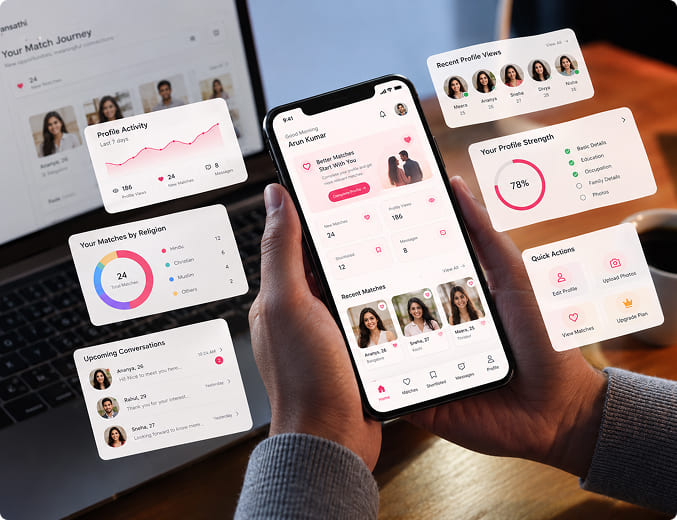
The Modernization Initiative Transformed The Legacy Application Into A Modern Web And Mobile Matchmaking Ecosystem, Introducing Personalized Matchmaking Based On User-Defined Preferences, Community-Driven Engagement, Improved Profile Discovery, Modern User Experiences, And A Scalable Application Architecture Designed To Support Future Growth.
One Of The Most Critical Aspects Of The Transformation Was The Migration Of The Existing High-Volume Data Ecosystem. The Modernization Was Executed With A Strong Focus On Zero Data Loss And Optimal Controlled Downtime, Ensuring That The Transition To The New Platform Did Not Compromise The Organization's Historical Data Or Business Continuity.

A Mature Platform Reaching The Limits Of Its Legacy Architecture
The Existing Matchmaking Application Had Been Serving Users For A Significant Period And Had Accumulated A Substantial Volume Of Data.
This Created A Unique Modernization Challenge.
The Objective Was Not To Start With An Empty Database And Build A New Application. The New Platform Had To Inherit The Value Of The Existing Ecosystem While Simultaneously Overcoming The Limitations Created By The Legacy Environment.
The Organization Was Dealing With Multiple Challenges Across Technology, Functionality, User Experience, Infrastructure, Scalability, And Future Extensibility.

Large Volume Of Existing Data
The Legacy Platform Contained Years Of Accumulated User And Matchmaking Information.
The migration strategy had to ensure that modernization preserved the platform's historical business value—including user profiles, preferences, and interaction history—while preventing any loss of:
Loss Of Historical Records
Incomplete User Profiles
Incorrect Data Mapping
Duplicate Records
Broken Relationships Between Data Entities
Inconsistent Information Between The Old And New Systems
Business Disruption During Migration
The Challenge Was Therefore To Modernize The Technology Without Losing The Accumulated Value Of The Existing Platform.

Functional Limitations
The Legacy Platform Was Originally Developed To Address The Matchmaking Requirements Of Its Time. As User Expectations Evolved, However, The Application Required More Sophisticated Functionality.
Traditional Matchmaking Experiences Generally Depend Heavily On Users Manually Searching Through Profiles And Applying Filters.
This Creates A Significant Amount Of Effort For The User.
Users Need To Repeatedly:
Search → Filter → Browse → Compare → Shortlist → Connect
The Modernization Provided An Opportunity To Change This Model.
Instead Of Treating The Platform Simply As A Large Database Of Profiles, The New Solution Was Designed Around The User's Preferences, Requirements, Discovery Behavior, And Engagement Needs.

User Experience Challenges
The Legacy Application Also Presented Challenges From A User-Experience Perspective. Modern Digital Users Expect Applications To Be:
- Fast
- Responsive
- Easy To Navigate
- Intuitive
- Mobile-Friendly
- Personalized
- Consistent Across Devices
- Simple To Use Even When The Underlying Functionality Is Complex
The Older Application Experience Did Not Fully Align With These Expectations. The Modernization Therefore Focused On Creating An Experience Where Users Could Interact With The Platform More Naturally, Discover Relevant Profiles More Efficiently, Manage Their Preferences Easily, And Engage With The Matchmaking Ecosystem Across Both Web And Mobile.

Non-Functional Challenges
The Transformation Also Addressed Several Non-Functional Requirements That Become Increasingly Important As A Digital Platform Grows. These Included:
Scalability: The new platform needed to support growing users, profiles, searches, and interactions — while enabling future capabilities without legacy constraints.
Performance: The Platform Needed To Provide A Smoother Experience For Profile Discovery, Search, Filtering, Profile Viewing, And Other Frequently Performed Operations.
Maintainability: The legacy architecture made enhancements challenging, while the modernized architecture makes the platform easier to maintain, enhance, test, and extend.
Extensibility: Matchmaking platforms evolve with new criteria, features, and integrations, so the architecture was designed to support future enhancements beyond immediate needs.
Reliability: As Matchmaking Is Highly Interactive, Modernization Focused On A Robust Foundation To Support Continuous Digital Engagement.
On-Premise Infrastructure Constraints
The Existing Platform Operated Within An On-Premise Infrastructure Environment.
While On-Premise Infrastructure Can Support Business-Critical Applications Effectively, It Can Also Introduce Challenges When An Application Needs To Scale Rapidly, Integrate With Modern Services, Support Multiple Channels, Or Adopt Newer Technologies.
The Modernization Therefore Provided An Opportunity To Establish A More Flexible And Future-Ready Technology Foundation.
The Objective Was Not Simply To Move Infrastructure.
It Was To Create An Application Architecture That Could Support Continuous Product Evolution And Digital Growth.
Transformation Objective
The Modernization Initiative Was Driven By Five Major Objectives:

Preserve Existing Business Value
Protect The Large Volume Of Historical Data Accumulated In The Legacy Application.

Modernize The Technology Foundation
Replace The Constraints Of The Legacy Architecture With A Modern, Scalable, Maintainable, And Extensible Platform.

Improve The Matchmaking Experience
Move Beyond Conventional Profile Searching And Introduce Matchmaking Based On Individual User Preferences.

Expand The Platform Into A Community Ecosystem
Transform The Application From A Traditional Matchmaking Portal Into A More Engaging Community-Based Platform.

Deliver A Consistent Multi-Channel Experience
Provide The Matchmaking Experience Through Both Web And Mobile Applications.
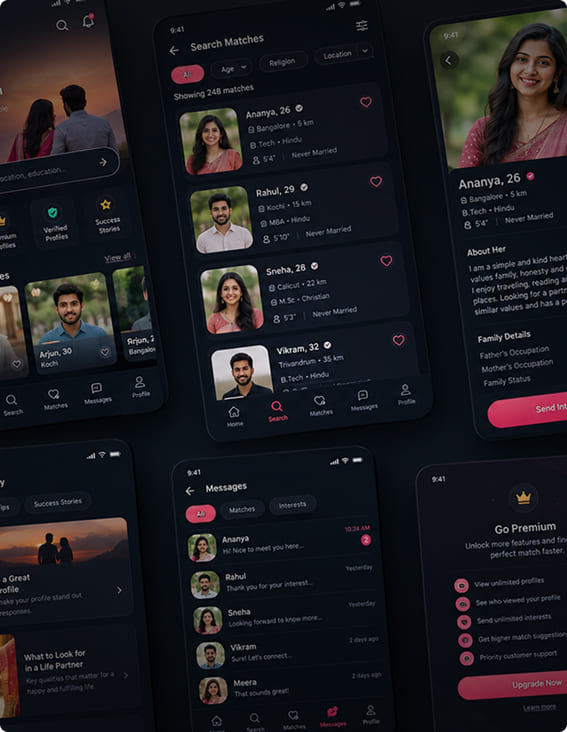
Comprehensive User Registration And Account Management
The Modernized Platform Provides A Structured Registration And Account Management Experience Through Which Users Can Create And Manage Their Accounts. The Registration Process Establishes The Foundation For The User's Matchmaking Profile While Enabling The Platform To Maintain Relevant User Information Throughout The Matchmaking Lifecycle. Users Can Securely Access And Manage Their Accounts Through The Modern Web And Mobile Experiences.
Detailed Profile Management
The Platform Provides Users With A Comprehensive Profile Management Capability. Instead Of Maintaining A Minimal Profile Containing Only Basic Information, Users Can Build A Richer Matchmaking Identity. Profile Information Can Cover Areas Such As:
- Personal Information
- Educational Background
- Professional Information
- Location
- Family Information
- Lifestyle Information
- Interests
- Matchmaking Attributes
- Other Relevant Profile Characteristics
This Richer Profile Structure Enables The Matchmaking Engine To Understand Users Beyond Basic Demographic Information. It Also Provides A Stronger Foundation For Preference-Based Discovery.
Preference-Based Matchmaking
The New Platform Introduces A Matchmaking Approach Centered Around User Preferences. The Conventional Approach Can Be Represented As:
Search → Apply Filters → Browse Large Number Of Profiles → Compare → Connect
The Modernized Approach Moves Toward:
Define Preferences → Evaluate Relevance → Discover Suitable Profiles → Review → Connect
This Distinction Is Important. The Platform Is No Longer Designed Simply To Give Users Access To More Profiles. It Is Designed To Help Users Discover More Relevant Profiles. This Reduces Unnecessary Browsing And Creates A More Personalized Matchmaking Experience.
Advanced Profile Discovery
Users Can Discover Profiles Based On Relevant Matchmaking Attributes And Preferences. The Discovery Experience Allows Users To Explore Potential Matches While Accessing Detailed Profile Information Before Deciding Whether To Express Interest Or Initiate Further Interaction. The Objective Is To Provide Relevance-Driven Discovery Rather Than Volume-Driven Discovery. Instead Of Measuring The Value Of The Platform By How Many Profiles A User Can Browse, The New Experience Focuses On How Effectively The Platform Can Help Users Identify Profiles That Align With Their Expectations.
Interest Management
The Platform Provides Functionality For Users To Express Interest In Profiles And Manage Their Matchmaking Interactions. This Creates A Structured Interaction Layer Between Profile Discovery And Communication. The Process Can Progress From:
Discovery → Profile Evaluation → Interest → Mutual Interaction → Communication
This Creates A More Meaningful Matchmaking Lifecycle Within The Platform.
Communication
Once Users Identify Relevant Profiles And Establish An Appropriate Interaction, The Platform Supports Communication Capabilities That Enable Users To Continue The Matchmaking Process Digitally. This Creates A Connected Experience Where Profile Discovery, Interest Management, And Communication Are Not Isolated Features But Components Of The Same Matchmaking Ecosystem.
Notifications And Engagement
Notifications Help Users Remain Informed About Relevant Matchmaking Activity. The Platform Can Keep Users Updated Regarding Interactions, Interests, And Other Relevant Activities, Reducing The Possibility Of Users Missing Important Engagement Opportunities. This Also Supports Continued Engagement With The Platform.
Privacy And User Controls
Privacy Is Particularly Important In Matchmaking Applications Because Users Share Personal, Professional, Family, And Lifestyle Information. The Modernized Platform Therefore Incorporates User-Oriented Controls Around Profile Visibility And Interaction. This Allows The Matchmaking Experience To Balance:
Discoverability + Personalization + User Privacy
Rather Than Treating These As Separate Concerns.
Modernizing Without Losing Historical Business Value
Modernizing Without Losing Historical Business Value. Data Migration Was One Of The Most Critical Components Of The Transformation. The Challenge Was Particularly Significant Because The Platform Contained A Large Volume Of Existing Data Accumulated Over Years Of Operation. The Migration Therefore Required A Controlled And Systematic Approach. The Process Involved:
Data Assessment
The Existing Data Structure And Legacy Database Environment Were Reviewed To Understand The Nature, Relationships, Dependencies, And Quality Of The Existing Information.
Data Mapping
Legacy Data Structures Were Mapped To The Corresponding Structures Within The Modernized Platform.
Data Transformation
Where Required, Legacy Data Was Transformed Into Formats Compatible With The New Application Architecture.
Controlled Migration
Data Was Migrated Through Controlled Processes Designed To Minimize Operational Risk.
Validation And Reconciliation
The Migrated Information Was Validated Against The Legacy Data To Ensure Consistency And Completeness.
Production Transition
The Final Transition Was Carefully Coordinated To Reduce Service Interruption And Support Continuity Of The Matchmaking Platform.
Zero Data Loss
The Most Important Outcome Of The Migration Was:
The Modernization Successfully Preserved The Existing Business Data While Transitioning From The Legacy Application To The Modern Platform. This Was Particularly Significant Because The Value Of A Mature Matchmaking Platform Is Strongly Connected To Its Accumulated Data. The Migration Therefore Achieved More Than Technical Data Movement. It Preserved The Historical Digital Asset Of The Business While Making That Asset Available Within A Modern Application Ecosystem.
Optimal Downtime And Business Continuity
Because The Matchmaking Platform Was An Active Business Application, Shutting Down The System For An Extended Period Was Not A Practical Option. A Prolonged Outage Could Have Affected:
- User Access
- Profile Discovery
- Matchmaking Activity
- User Communication
- Business Operations
- Customer Experience
The Migration And Deployment Approach Was Therefore Structured To Achieve Optimal And Controlled Downtime. The Objective Was To Transition Users From The Legacy Environment To The Modernized Platform While Minimizing Disruption To Ongoing Operations. This Ensured That Modernization Could Happen Without Treating Business Continuity As An Afterthought.
Before And After Transformation
| Dimension | Legacy Environment | Modernized Platform |
|---|---|---|
| Architecture | Aging Legacy Architecture | Modern Scalable Architecture |
| Infrastructure | On-Premise Environment | Modern, Flexible Technology Foundation |
| Data | Large Historical Data Ecosystem | Migrated And Preserved |
| Data Migration | High-Risk Modernization Requirement | Zero Data Loss |
| Downtime | Major Migration Concern | Optimal / Controlled Downtime |
| Matching | Conventional Criteria | Preference-Driven Matchmaking |
| Discovery | Search And Browse Focused | Personalized Discovery |
| Engagement | Primarily Matchmaking Focused | Community-Driven Engagement |
| User Experience | Legacy Experience | Modern Responsive Experience |
| Accessibility | Traditional Platform | Web + Mobile |
| Scalability | Constrained By Legacy Environment | Designed For Growth |
| Maintainability | Complex Legacy Dependencies | Modern Maintainable Architecture |
| Extensibility | Difficult To Evolve | Designed For Continuous Enhancement |
| Future Readiness | Limited | Future-Ready Foundation |
What Makes The Modernized Platform Different?
The Transformation Is Not Based On A Single Feature. Its Differentiation Comes From The Combination Of Multiple Capabilities Within One Ecosystem.

Preference-Centric Matchmaking
Instead Of Making Users Repeatedly Search Through Large Numbers Of Profiles, The Platform Places User Preferences At The Center Of The Matchmaking Experience.

Personalized Discovery
The Objective Is Not Simply To Provide More Profiles, But To Make Profile Discovery More Meaningful And Relevant.

Community-Based Experience
The Platform Extends Beyond Conventional Matchmaking By Creating A Community-Oriented Environment That Can Support Continued User Engagement.

Unified Web And Mobile Experience
Users Can Interact With The Same Matchmaking Ecosystem Through Both Web And Mobile Channels.

Modern Technology Foundation
The Application Has Been Rebuilt On A Modern Architecture Capable Of Supporting Scalability, Maintainability, Extensibility, And Future Digital Capabilities.

Enterprise-Grade Data Modernization
The Platform Was Modernized While Preserving Its Historical Data Through A Controlled Migration Approach That Achieved Zero Data Loss.

Business Continuity During Transformation
The Modernization Was Executed With A Focus On Minimizing Disruption And Achieving Optimal Controlled Downtime.
Quantitative Transformation
At A Glance
The Transformation Can Be Summarized Through The Following Measurable Outcomes:
Note: Additional Numerical KPIs Such As Search-Time Reduction, Match Conversion Improvement, Engagement Growth, Application Response-Time Improvement, And User Retention Should Be Added Only When Actual Production Metrics Are Available.
Data Loss
Historical Business Data Was Migrated Without Data Loss.
Digital Channels
A Connected Experience Was Delivered Across Web + Mobile.
Unified Ecosystem
Both Channels Form One Integrated Matchmaking Ecosystem Rather Than Isolated Applications.
Preference-Centric Approach
Matchmaking Functionality Was Redesigned Around User-Defined Matchmaking Preferences.
Community-Based Platform
The Traditional Matchmaking Application Evolved Into A Broader Community-Driven Digital Ecosystem.
Migration Downtime
The Transition Was Executed With A Controlled Approach Focused On Minimizing Business Disruption.
Technology Benefits
The Modernization Delivered Benefits Beyond The Visible Application Interface.

Improved Scalability
The New Architecture Provides A Stronger Foundation For Supporting Increasing User Volumes, Profiles, Interactions, And Future Functionality.

Improved Maintainability
A Modern Application Structure Makes Ongoing Development And Maintenance More Manageable.

Faster Future Enhancement
New Matchmaking Criteria, Community Capabilities, Integrations, And Intelligent Features Can Be Introduced More Efficiently.

Better Performance Potential
The Modernized Architecture Provides A Stronger Foundation For Optimizing Application Response Times And High-Volume Operations.

Multi-Channel Readiness
The Same Business Ecosystem Can Serve Users Through Both Web And Mobile Interfaces.

Future Technology Readiness
The Platform Is Positioned To Adopt Advanced Technologies Without Requiring Another Fundamental Architectural Transformation.
Business Benefits

Improved Match Relevance
By Introducing Preference-Centric Matchmaking, The Platform Can Move Toward Presenting Users With Profiles That Are More Aligned With Their Requirements.

Reduced Discovery Effort
Users Can Spend Less Time Manually Browsing Through Large Volumes Of Profiles And More Time Evaluating Relevant Potential Matches.

Improved User Experience
A Modern, Responsive, And Intuitive Interface Creates A More Engaging Experience Across Devices.

Greater Digital Accessibility
The Availability Of Both Web And Mobile Applications Expands The Ways Users Can Interact With The Platform.

Increased Engagement Potential
The Community-Based Approach Creates Opportunities For Users To Remain Engaged With The Ecosystem Beyond Basic Profile Searching.

Preservation Of Historical Business Value
The Existing Data Was Not Discarded During Modernization. It Was Migrated Into The New Ecosystem, Protecting The Value Accumulated Over Years Of Platform Operation.

Reduced Technology Constraints
The New Architecture Removes Several Limitations Associated With The Legacy Environment And Creates Greater Flexibility For Future Product Development.
A Foundation For Intelligent Matchmaking
The Modernization Also Creates The Technical Foundation Required For Future Intelligent Capabilities. While These Capabilities Represent Future Opportunities Rather Than Current Implementation Claims, The Modern Architecture Can Provide A Strong Foundation For Technologies Such As:
- AI-Assisted Matchmaking
- Intelligent Recommendation Engines
- Personalized Profile Recommendations
- Behavioral Analytics
- Intelligent Notifications
- Predictive Matchmaking Insights
- Community Intelligence
- Personalized User Experiences
- Automated Engagement
- Advanced Matchmaking Analytics
This Means The Modernization Is Not Simply A Replacement Of The Old Platform. It Establishes An Architecture Capable Of Evolving Alongside The Next Generation Of Digital Matchmaking Technologies.
Overall Transformation
The Transformation Can Be Viewed Across Four Levels:
Technology Transformation
The Underlying Technology Was Modernized To Remove Legacy Constraints And Provide A Foundation For Continuous Evolution.
Data Transformation
Years Of Accumulated Data Were Migrated Without Data Loss, Ensuring That Historical Business Value Remained Intact.
Experience Transformation
Users Moved From A Predominantly Manual Profile-Searching Experience Toward Preference-Driven Matchmaking And Discovery.
Business Transformation
The Platform Evolved From A Traditional Matchmaking Application Into A Broader Digital Ecosystem Designed To Support Personalization, Interaction, Engagement, And Community.
Final Result
The Modernization Transformed A Mature, Data-Intensive, On-Premise Legacy Matchmaking Application Into A Modern, Scalable, Personalized, Web-And-Mobile Matchmaking Ecosystem. The Transformation Successfully Addressed The Limitations Of The Existing Platform While Protecting The Most Important Business Asset—The Accumulated User And Matchmaking Data. The New Platform Introduced A More Personalized Approach To Matchmaking Through User-Defined Preferences, Enhanced Profile Discovery, Improved Interaction Capabilities, And A Community-Based Engagement Model. At The Same Time, The Modernization Established A Stronger Technology Foundation Capable Of Supporting Scalability, Maintainability, Continuous Enhancement, And Future Intelligent Capabilities. Most Importantly, The Transformation Was Achieved Without Compromising The Historical Value Of The Platform.
Zero Data Loss Ensured That The Existing Business Data Was Preserved, While The Migration Strategy Focused On Optimal Controlled Downtime To Maintain Business Continuity. The Result Was Not Simply A New Version Of An Old Application. It Was A Transition From A Legacy Matchmaking Application To A Modern Digital Matchmaking Ecosystem—One Designed To Make Matchmaking More Personalized, Discovery More Relevant, Engagement More Meaningful, And Future Innovation More Achievable.